By: Eric Ruppel
Why Congress Comes First
Once we understand why we have a government and what it is meant to do, the next question is how it accomplishes those goals. The Preamble lays out the broad goals of union, justice, peace, security, well-being, and liberty, but Article I is where the federal government begins to exercise its power – through Congress, the representative body of the People.
You have likely heard the phrase, “co-equal branches of government” in the last decade as Presidents, Congress, and the courts clash over various issues. But is the balance truly equal?
Article I, the foundation of legislative power, is the most dense and detailed read in the Constitution. We’ll break it down for you here.
When the Constitutional Convention met in 1787, they were only a few years removed from colonial rule and the Revolutionary War. Much of the conflict stemmed from King George III’s overreach, particularly his disregard for colonial self-governance and taxation without representation. To prevent future tyranny, the framers divided federal power among three branches: Legislative, Executive, and Judicial.
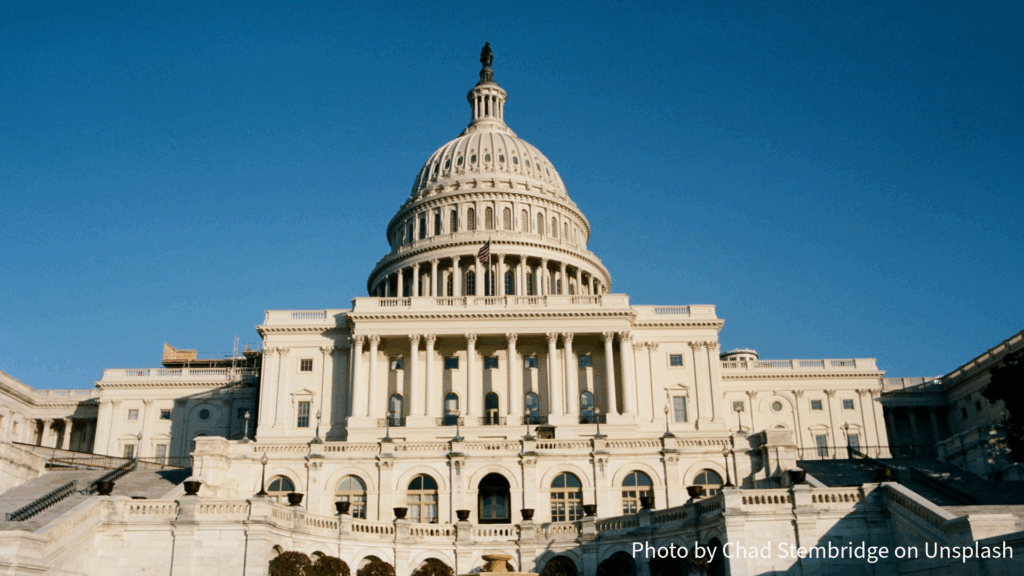
Congress, the Legislative Branch, is the only branch explicitly granted the ability to create federal laws. In a representative democracy, this makes Congress the central organ of government—the arena where public will becomes public policy. Importantly, the President is not given this lawmaking power (more on that in our Article II and III installments).
Breaking Down the Blueprint
Without diving too deeply (and completely losing our audience), here is an overview of the whole thing: Article I is divided into 10 sections that establish the House and Senate and outline the structure, general procedures, and rules for each. It then codifies the process for a bill to become law and defines the things that the Legislative Branch can do, before placing limitations on both members of Congress and the States.
Section 8 is particularly significant. It contains 18 clauses listing the specific powers granted to Congress, such as taxation, commerce regulation, war declarations, and maintaining a military. The Tenth Amendment later reinforced the principle of limited federal power: “The powers not delegated to the United States by the Constitution, nor prohibited by it to the States, are reserved to the States respectively, or to the people.”
While Section 1 of Article I states that legislative powers rest solely with Congress, Section 8 defines what those powers are. In principle, Congress should legislate only within the scope of these powers.
Yet over time, Congress has interpreted its powers more broadly. For example, the establishment of the Federal Reserve and the New Deal were justified under the “necessary and proper” clause—the so-called “elastic clause” at the end of Section 8. This clause gives Congress authority to pass laws needed to execute its listed powers. Courts have both supported and constrained such interpretations, as seen in McCulloch v. Maryland (1819) and United States v. Lopez (1995).
But what does “necessary and proper” really mean? That is still the source of much debate with many scholars arguing for broad interpretations that support existing laws, while others maintain that a narrower understanding of this clause could invalidate many laws we take for granted today.
What’s Not There – and Why It Matters
Even though the framers of the Constitution debated whether or not to establish clear term limits for federal officials, the Constitution does not impose term limits for members of Congress. Today, 17% of Senators and 14% of House members have served over 18 years. Millions of voters across the country have never known anyone but their incumbent in that seat.
[Kentucky currently has a few notable legislators with terms much longer than this. Mitch McConnell has served consecutively for the second-longest active term in the Senate at 40 years (seven Senatorial elections, behind only Chuck Grassley). Hal Rogers (KY-5, Eastern Kentucky) is tied with Chris Smith for the longest active term in the House at 44 years. Every voter younger than 58 years old in Eastern Kentucky has only ever had one other representative at the federal level, currently Rand Paul.]
Also missing from Article I are: any mentions of political parties, campaign finance rules, or details regarding Congressional districts, which was considered a matter for individual states.
How Congressional Power Has Shifted
Our understanding of the Constitution today is informed not only by the text itself; it has also been informed in one way or another by the debates that the framers held when they decided each word, and by every piece of legislation that has been debated and every case that has come before the courts on this matter. To understand how the role of Congress has been applied, contested, and expanded/reduced over time, let’s take a few examples:
- Civil Rights Act (1964): Justified through the Commerce Clause, Congress outlawed racial discrimination in public accommodations based on its impact on interstate commerce. It was seen as a justified expansion of its authority, passing laws that regulate American society because of the impact of segregation on commerce between states.
- War Powers: Only Congress can declare war, but Presidents have initiated military action in conflicts (Korea, Vietnam, Iraq, and numerous smaller conflicts) without formal declarations. The 1973 War Powers Act requires the Executive to notify and seek approval of Congress for extended deployments, but enforcement has been inconsistent.
- Fiscal Conflicts: Congressional infighting has also unintentionally weakened its own authority. Budget showdowns and debt ceiling fights have been used as tools in political standoffs, which has damaged public confidence.
- Executive Workarounds: When Congress is gridlocked, Presidents often resort to executive orders and agency rulemaking to enact policy. We will discuss this more in our next article when we discuss Presidential power.
Democracy or Republic?
This leads to an important philosophical question: What should we call the government that the framers envisioned? Although we often refer to the U.S. as a democracy, the Constitution never uses the word. Instead, Article IV, Section 4 guarantees a “Republican Form of Government.”
The framers feared that a “direct” or “pure” democracy – where citizens vote directly on laws – would result in instability, mob rule, and/or majoritarian, popular tyranny (not to mention it was simply impossible to achieve with a dispersed population and 18th-century technology). They wanted to establish a structure that would allow even minority elements to have representation and stability. A republic is a form of representative democracy in which the public elects officials to make laws on their behalf. The Constitution codifies a hybrid system with elements of both pure democracy and representation.
Originally, only the House was directly elected in a popular vote, and only land-owning white men were eligible to vote. After almost a century, this began to change through the 17th Amendment (1913) allowing for direct election of Senators (bringing the entire Legislative Branch under popular control) and federal voting rights expansions (notably 1870, 1920, 1964, 1965, and 1971), however the President remains elected indirectly, by popular vote filtered through the Electoral College.
The U.S. system is generally characterized by terms like “constitutional democracy” or “democratic republic” or “representative democracy” because it blends elements of each, as well as protections for minority rights. In the end, which term you prefer is largely a matter of preference because the important point is this: our government was enshrined with democratic principles in mind, and the Constitution includes mechanisms to ensure popular input is balanced against institutional stability and the rights of all.
Civic Power in a Polarized Age
Walk down any street and ask ten random people whether Congress is doing its job and whether they approve of it, and there is a good chance the answers will be “no” and “no”. Public trust in government has fallen significantly from the postwar decades through the early 21st century. According to Gallup, Congress entered the year 2000 at a 51% approval rating and declined for a decade before mostly stabilizing at an average 18% approval rating since 2010. While partisan approval shifts depending on which party holds power, public frustration with perceived dysfunction is widespread.
Why do we collectively feel such intense antipathy to Congress, when we elected them?
The Constitution deliberately made lawmaking difficult. The framers feared tyranny more than gridlock. They expected the People to elect leaders who could advance their will within a stable, balanced system. They assumed that debate, compromise, and thoughtful action would prevail, and when faced with gridlock and a desire for change, they expected the People to elect new leaders.
They also wanted to separate powers into multiple branches of government with the ability to check and balance one another. They tried to balance the interests of large and small states, with a structure that emphasizes a deliberate and methodical (read: slow) pace of change.
However, it is safe to say that the Founders could never foresee the internet, social media, or the modern 24/7 news cycle, let alone AI and all the other massive technological advancements of the last 250 years. They underestimated the rise and extreme power of our political parties. While they allowed states to determine political districts, they also did not foresee gerrymandered districts resulting in a hyper-polarized House. They did not predict the rise of corporations and the increased length or cost of national election cycles.
Yet the Constitution endures. Given the scale and speed of societal and technological change over the last century alone, it is all the more miraculous that this document has stood the test of time as well as it has. This founding document still enshrines our entire system of government, our basic and expansive freedoms, and provides the bedrock principles to organize around if we want to protect it all. It still empowers citizens to direct their government through Congress.
This is why calling your legislators matters when policies are proposed, whether you support or oppose them – Congress has always been vested with the will of, and directed by, the People of this nation.
Please note: We at KYCfD are not lawyers or legal scholars — we are average citizens trying to lean on and reclaim the founding truths in our country in a tumultuous time. Please comment on our social media posts or send us a message if you find inaccuracies in our newsletter or want to provide additional insights. We will issue corrections and clarifications as often as we need to! We will continue to publish pieces that outline key elements of our Constitution in each newsletter, so be sure to follow KCfD on Facebook and at www.kycitizens.org!
Further reading:
Read the full Constitution and find in-depth analysis of each part, as well as critical cases and more: https://constitution.congress.gov/constitution/
You can purchase a pocket-sized Constitution from numerous places, including Amazon, for $1.50 here: https://www.amazon.com/gp/product/0880801441/
The Federalist Papers (esp. 10, 51, and 58) provide deep insight into the framers’ intentions around the separation of powers, legislative authority, and fears of faction.
To read more on ideological foundations and debates of the Constitution, check out Gordon S. Wood’s The Creation of the American Republic, 1776-1787 (University of North Carolina Press, 1969).
Richard Beeman’s Plain, Honest Men: The Making of the American Constitution (Random House, 2009) also includes a detailed analysis of the Constitutional Convention and key debates, including the Preamble. Lastly, the National Constitution Center’s Interactive Constitution helps the entire document come alive, with historical and modern context and scholarly commentary on each section: https://constitutioncenter.org/interactive-constitution
Leave a Reply