This article is part of a series exploring the U.S. Constitution, from its foundations and original debates to its application and evolution in modern society. Our first piece about the purpose of government through the lens of the Preamble is here. To learn more about Congress, “the People’s branch”, click here. The Presidency got its own review here. Stay tuned for pieces on the Bill of Rights and more.
Introduction – the Quiet Power
Underneath the hubbub of the weekly news cycle and the 24/7 barrage of partisanship we face on every single issue, the courts quietly hum along… until they release a ruling and all hell seemingly breaks loose.
Most judicial rulings and orders go unnoticed by the vast majority of Americans, which is a good thing, but some of them really turn heads and become headlines for weeks, months, or even years. Meanwhile, others that nearly U-turn this American cruise ship barely make a wave in our news feeds. Why is that? How does judicial power work; where does it come from; and how has it changed? In this article, we examine the Judicial Branch.
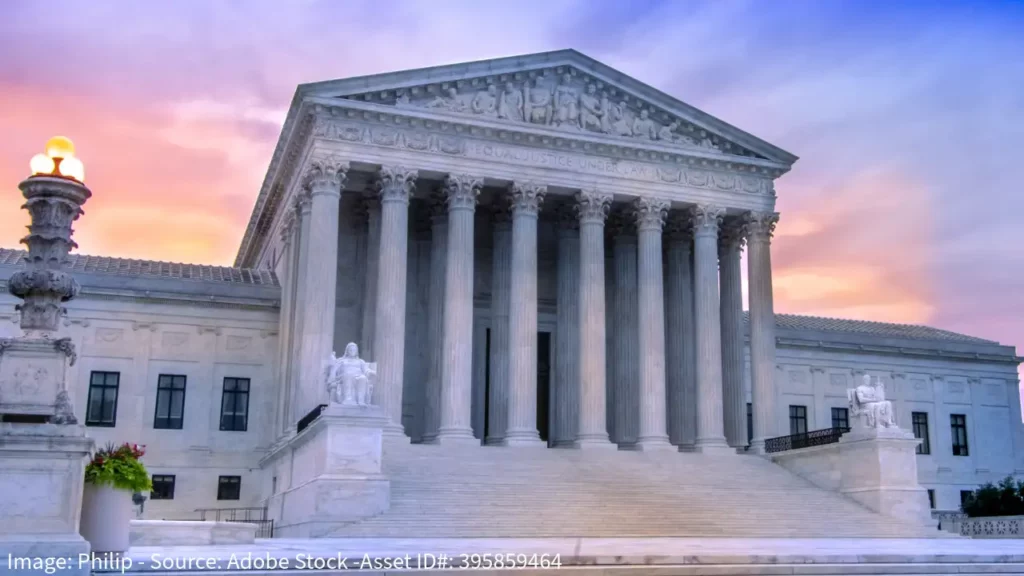
Article III – Brief Overview
Article III of the U.S. Constitution is a pretty short and easy read. First, Section 1 establishes a Supreme Court and “inferior Courts as the Congress may from time to time ordain and establish.” (Again, note the power of Congress coursing through and defining the entire federal government.) Section 2 defines the scope of judicial power as anything that relates to: law and equity under the Constitution, laws of the United States, treaties, ambassadors, maritime jurisdiction, controversies between states and between citizens of different states, or between a state and its citizens. Lastly, Section 3 defines treason and its punishment.
How are the Courts Structured?
As Section 1 outlined, Congress has the ability to establish courts as needed. As the judicial needs of the country grew, Congress established both Circuit and District Courts, in addition to the Supreme Court.
Most cases start in District Courts, and if one party appeals the judge’s ruling, it is remanded to an appellate (appeals) court higher up. [Some cases may start elsewhere, for example if the issue is between states or arising from specific courts like Tax Court or immigration courts.] Even though it may seem very active sometimes, the Supreme Court only takes up appr. 1% of cases that are appealed to it, though it can also release rulings in the so-called “shadow docket” that handles emergency applications and other expedited decisions made outside the regular court process.
* One notable point that is important to understand in 2025: immigration courts are not in the judicial branch. They exist under the Department of Justice in the Executive Branch, and the immigration judges in these courts are DOJ employees, so their rulings are administrative decisions. Appeals typically go through a DOJ appeals board, however noncitizens who want to challenge an appeal decision on constitutional grounds, errors of law, or due process violations can appeal to a federal court – usually a U.S. Circuit Court of Appeals. While the Department of Justice has traditionally been held as an independent agency, it is possible for the President to influence rulings. Over 50 judges have been dismissed during Trump’s second term so far, and recently there have also been concerning allegations that immigration judges were ordered to rule one way or another by the Trump administration.
Other courts operate under the Executive Branch due to their technical, specialized, or high-volume caseloads. These include courts related to Social Security, Veterans Affairs, labor issues, immigration issues, and tax, commerce, and trade issues. Many final decisions made in these administrative courts can be reviewed by the federal judiciary, which importantly ensures constitutional compliance and legal oversight.
How has Judicial Power Evolved over Time?
The defining moment in American judicial history happened within 20 years of the Constitution’s adoption. The Marbury vs. Madison (1803) ruling asserted that the Supreme Court has the authority to review laws and declare them unconstitutional when necessary. This landmark case ensured that the Judicial Branch would serve as a critical check against Congress and that the system of mutual checks and balances established in the Constitution would be effective. The underlying judicial theory in this case had been well established, including by Alexander Hamilton in Federalist No. 78, where he stated, “The interpretation of the laws is the proper and peculiar province of the courts… It belongs to them to ascertain [the Constitution’s] meaning…and disregard any statute inconsistent with it.” If the people hold the power, not the government itself, then the Court is rightly doing its job when it acts to prevent a branch of government from eroding rights that are enshrined in the Constitution.
Since 1803, courts have stepped into many important moments of American history, each of which contributed to a growth in judicial (and other federal) power. To name a few:
- Brown v. Board of Education (1954): Overturned Plessy v. Ferguson (1896), ending legal segregation in public schools. The Court interpreted the Equal Protection Clause of the 14th Amendment more expansively, declaring that “separate but equal” was inherently unequal.
- Griswold v. Connecticut (1965): Struck down a ban on contraception for married couples. The Court inferred a “right to privacy” from various parts of the Bill of Rights, even though it’s not explicitly stated.
- Roe v. Wade (1973) (overturned via Dobbs v. Jackson, 2022): Extended the right to privacy to a woman’s decision to have an abortion, interpreting liberty under the Due Process Clause.
- Citizens United v. FEC (2010): Struck down limits on independent political expenditures by corporations and unions, ruling that such spending is protected under the First Amendment’s free speech clause. This dramatically changed the landscape of campaign finance, leading to the rise of Super PACs and increased political influence by wealthy donors and organizations.
- Obergefell v. Hodges (2015): Legalized same-sex marriage nationwide. The Court interpreted the 14th Amendment’s guarantees of due process and equal protection to include the right to marry.
In each of these cases, a person or organization with legal standing claimed direct injury due to a law or government action, so they challenged the constitutionality of laws and policies, with far-reaching effects.
How do Judges Enforce Rulings?
Even though courts lack a standing army or the ability to tax and spend, for some reason people generally follow judges’ orders. Why is that?
Failing to comply with court orders can lead to contempt of court charges. Contempt, like all charges, can be broken down into two types: civil and criminal. Civil contempt is intended to coerce compliance or compensate for harm, like refusing to turn over evidence. Punishment for either type of contempt can include fines or jail, but as soon as the person is compliant with an order, civil contempt punishment ends (thus the person “holds the keys” to their release in this case). Criminal contempt is intended to punish past disobedience, such as violating orders related to due process.
While both judges and Congress can pursue contempt convictions, they generally rely on the Executive Branch for enforcement. In 2025, the Justice Department has become somewhat less independent from presidential influence than is typical, which means judges and legislators could face challenges if they tried to use the U.S. Marshals Service to enforce contempt charges against administration officials’ wishes.
The “One Big Beautiful Bill Act” initially included a provision that could have severely limited judges’ ability to enforce contempt charges, but this was ultimately struck out by the Senate Judiciary Committee, likely due to concern that it would not be eligible for passage in that particular bill.
Norms and the Perception of Legitimacy
To a large degree, modern society functions because the population respects the authority of courts. We rely on everyone around us to follow court orders to ensure a free and fair society for all.
While many rulings outlined above expanded judicial power, at the time of their passage, many of them were controversial. “Legislating from the bench” is an accusation that is frequently lobbed at judges when their opponents believe they are stepping into lawmaking actions or opinions, rather than exercising judicial restraint. The lines are not always clearly drawn, so these orders risk further polarizing public opinion.
Like any institution, the judicial branch faces challenges when the public loses trust in it. Even when Presidents and Congress use legal and legitimate political tactics to shape the judiciary, it causes the public to perceive the courts as overly politicized.
Federal judges are not directly elected by the people, but appointed by the President. While judicial nominations used to sail through Senate confirmation, in recent years, there have been several partisan efforts to pack the bench when a friendly Senate sits next to a President of the same party or block nominations from the other party. Throughout Donald Trump’s first term, for example, he appointed 54 federal appellate judges and 174 District Court judges (by contrast, Barack Obama appointed 55 and 268, respectively, over the course of his two terms, in line with George W. Bush’s totals). Democrats are partially to blame for this Republican success – Sen. Harry Reid invoked the “nuclear option” in 2013 to keep Republicans from using the filibuster to prevent judicial appointments, which paved the way for a massive increase in successful Trump nominations. Obama had 73 federal judge nominations that failed to get Senate approval by the end of his term (Trump had 32 after his first term; Biden had 15). When appeals courts (and the Supreme Court itself) shift balance from majority one party to another, it can impact the impression that one party is putting its thumb on the scale, and delegitimize the entire institution.
Break it Down: Injunctions, Stays, and other Orders
The news is full of stories that include confusing or vague judicial jargon. Let’s take a break to clear up a few of the most common terms for you: Injunctions are a court order to do or stop doing something. A stay is a pause on legal proceedings or enforcement. Declaratory judgments are less common in the news, but important to note since they clarify legal rights without ordering action.
Should Nationwide Injunctions be Allowed?
That brings us to a huge debate in our current environment. While judges have used their power to issue periodic nationwide injunctions since the 1910s, in the last two decades the opposition party has used nationwide injunctions (aka universal injunctions) to significantly slow down or halt presidential action. [It is worth noting that this corresponds with our previous coverage of the massively increasing use of executive power during that time.] In many cases, individuals tend to engage in “forum shopping” to file a federal suit within the jurisdiction of judges who are likely to rule in their favor.
The count of injunctions per administration varies due to differences in methodology and definition, but it is clear that the use of injunctions drastically increased during the first Trump administration (largely filed by Democrats). By Bloomberg Law’s count, President Trump’s first term faced 64 injunctions, vs. under a dozen in preceding administrations – mostly issued by opposing-party appointees. These affected all sorts of major policy priorities for each administration, from the Affordable Care Act and student loan forgiveness to immigration and abortion.
In Trump v. CASA, the Supreme Court limited this practice, stipulating injunctions must match only plaintiffs’ relief needs. This ruling will weaken judicial power for the foreseeable future, since lower courts will require plaintiffs to demonstrate a much stronger case to get “complete relief” under a universal injunction. This will undoubtedly lead to a patchwork of legal and executive implementation that is highly likely to face severe public scrutiny.
As the Bloomberg Law article suggests, reforms such as random assignment of cases seeking universal injunctions or requiring panels of judges to issue nationwide injunction could go a long way to fixing a system that has lost public trust, and simultaneously help Americans preserve and defend their freedom from executive overreach. Injunctions are a necessary part of our system, but in order to function for ALL Americans, we need to improve the way they are implemented.
Civic Power in a Polarized Age
While civic power is limited with regard to the Judicial Branch, that doesn’t mean we are powerless to affect it. Federal judges are appointed for life, and must receive Senate confirmation. Every single law and presidential action can be litigated and appealed in a courtroom and it is important to know that every vote you cast (or don’t cast) can affect which actions stand – and which are effectively challenged.
This piece focused on the federal judiciary, but don’t forget that many local and state judges are directly elected by the people. These judges can oversee redistricting, education funding, criminal sentencing, and other civil rights issues long before they reach the federal level.
Even though you can’t lobby federal judges the way you can call your representatives in Congress, judges still pay attention to public discourse. Public advocacy, protest, and other civic movements can drastically shift court opinions, such as they did in the 1960s during the Civil Rights movement. You can also lobby your legislators to reform the court system and ensure a free and fair society for all of us, and the generations to come. Your voice matters. Use it.
Please note: We at KYCfD are not lawyers or legal scholars — we are average citizens trying to lean on and reclaim the founding truths in our country in a tumultuous time. Please comment on our social media posts or send us a message if you find inaccuracies in our newsletter or want to provide additional insights. We will issue corrections and clarifications as often as we need to! We will continue to publish pieces that outline key elements of our Constitution in each newsletter, so be sure to follow KCfD on Facebook and at www.kycitizens.org!
Further reading:
Read the full Constitution and find in-depth analysis of each part, as well as critical cases and more: https://constitution.congress.gov/constitution/
You can purchase a pocket-sized Constitution numerous places, including Amazon for $1.50 here: https://www.amazon.com/gp/product/0880801441/
The National Constitution Center’s Interactive Constitution helps the entire document come alive, with historical and modern context and scholarly commentary on each section: https://constitutioncenter.org/interactive-constitution SCOTUSblog is a fantastic resource to keep up with the courts: https://www.scotusblog.com/
Leave a Reply